Please press Ctrl+B to open the bookmarks and switch between different sections.
The two slides highlight contrasting trends in the investigation of the neuropathology of psychiatric disorders. In this era (late 1980s–present), the vast majority of research follows the left flow, while only a small minority pursues the right flow—attempting to identify the core neuropathology.
This paper introduces a novel dialectical method—centralized dialectics—based on "analysis-synthesis" for addressing complex phenomena that might lack clear antagonistic features and are governed by parsimonious underlying mechanisms. When applied to neuroscience, this method is referred to as "dialectic neuroscience."
Centralized dialectics is fundamentally about releasing mental power by channeling creative thinking—arguably the most powerful gift bestowed by God—into scientific endeavor. It restores our confidence in the unique strength of the human mind, even in the face of the overwhelming rise of Machine Learning and Artificial Intelligence (AI).
The first paper, following the principles of Dialectic Neuroscience, derives a compartment-level imbalance between the fronto-parietal compartment and the limbic compartment as the core neuropathology of MDD.
The second paper provides empirical validation of this theoretical framework.
The first paper, following the principles of Dialectic Neuroscience, derives overdriving of the ventral tegmental area as the core neuropathology of BD.
The second paper provides empirical validation of this theoretical framework.
Following the principles of Dialectic Neuroscience, left frontal lobe developmental deviation is derived as the core neuropathology of ASD. The theoretical framework and its empirical examination are presented in a single report because the current literature is heavily biased toward social cognition, which limits more rigorous theoretical analysis.
The first paper, following the principles of Dialectic Neuroscience, derives miswiring of the prefrontal cortex with the ventral tegmental area as the core neuropathology of ADHD.
The second paper provides empirical validation of this theoretical framework.
The first paper, following the principles of Dialectic Neuroscience, derives miswiring of the prefrontal cortex to the caudate and putamen as the core neuropathology of OCD.
The second paper provides empirical validation of this theoretical framework.
Since the time of Mesopotamian civilization, psychiatric disorders have been documented. Yet their fundamental nature has remained largely mysterious. Over the past century, the most significant advances have come from psychodynamics and psychopharmacology; however, in terms of truly solving the puzzle of psychiatric disorders, these approaches have largely fallen short.
Thanks to the development of modern brain science, we are now finally in a position to address this question directly. Major psychiatric disorders appear to arise from two primary sources. The first involves brain organization bugs, as exemplified by major depressive disorder (MDD), bipolar disorder (BD), and occurrence of obsessive symptoms in obsessive-compulsive disorder (OCD). The second reflects weaknesses in the brain’s design, as seen in autism spectrum disorder (ASD), attention-deficit/hyperactivity disorder (ADHD), and obsessive-compulsive disorder (OCD).
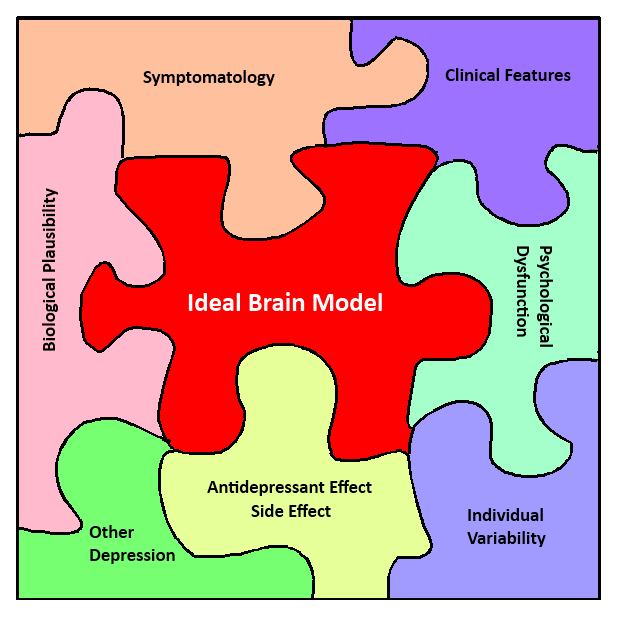
My ability to approach the essence of psychiatric disorders relies in part on a perspective informed by the philosophy of science. Although psychiatric phenomena appear highly complex on the surface, they must also possess a parsimonious underlying structure. This simpler side has been largely overlooked by most research. My guiding principle, much like that of many great scientists, is to distill the complex and diverse phenomena of the mind down to their fundamental principles. This guiding principle is difficult to identify in life sciences because it relies on a new scientific standard—namely, Dialectic Neuroscience. Its fundamental principle is centralized dialectics, which I illustrate in the figure below.
The phenomena of the human mind, including its abnormalities, constitute a profoundly fascinating domain. I feel fortunate to be a psychiatrist, as my long-standing interests in literature, philosophy, religion, psychology, and science have all found expression and fulfillment in this field. In attempting to unravel the essence of psychiatric disorders, I have had to climb three metaphorical mountains. The first is theoretical: around 2016, I developed the framework of Dialectic Neuroscience. The second is empirical. Because the current era has a limited understanding of how rigorous theoretical work should be proposed and evaluated—and lacks clear standards for assessing such contributions, a condition that persisted until the introduction of Dialectic Neuroscience and remains largely unrecognized—I had to provide empirical support for the developed theory myself. Importantly, these empirical demonstrations do not constitute, nor can they substitute for, the foundation of the theory. Rather, the theoretical development based on Dialectic Neuroscience is self-sufficient, with the theoretical framework guiding the empirical work. Within a research culture largely dominated by empiricism, demonstrating a theoretical framework through empirical studies became an unavoidable strategy for making both the theory and its distinctive path of development intelligible and acceptable to the broader community. Through this process, I also developed new research methodologies to generate evidence. This effort represents the second mountain and, in turn, further demonstrates the strength of the framework of Dialectic Neuroscience. The interaction between the theoretical and empirical branches is discussed in Section 2. The third mountain, though conceptually the simplest, may ultimately take the longest to scale: gaining recognition from the scientific community. At present, many brain scientists—whose work is largely shaped by psychological or engineering-oriented approaches—may not yet fully recognize that deciphering psychiatric disorders requires distinct methodological frameworks. At the same time, many psychiatrists do not always have sufficiently deep training in brain science to address these questions at the necessary mechanistic level. Through my lectures, I have observed interestingly polarized reactions. Established psychiatrists may not always be familiar with this line of work, and some may interpret my contributions as offering perspectives that differ from established approaches. In contrast, younger colleagues have shown remarkable interest, positivity, and enthusiasm. Consequently, I have increasingly turned my attention to the next generation, dedicating more time to engaging with young psychiatrists and researchers.
I still remember that during my residency, I was both deeply curious and acutely aware of a sense of insufficiency in the field. This arose from observing the rapid progress in other disciplines—computer science, molecular biology, cognitive and experimental psychology, and other areas of medicine—while psychiatry advanced at a much slower pace. Today, I feel a sense of abundance. In addressing the essence of psychiatric disorders, I have developed complementary scientific standards that other fields can adopt, established a new identity for psychiatry brain research, and created novel methodologies (including MOSI, EMSEV, and network causality). We have finally set foot on solid ground, enabling us to open a new chapter of psychiatry from core neuropathology under the guidance of rigorous hypotheses.
Chen (Tien-Wen) Lee, MD, PhD
Mar 2026
Dialectic_Neuroscience_Slides.pdf
Note: Due to compression, playback quality may be reduced. For best results, use a dedicated media player such as VLC Media Player.